>>
>>
Titanium Dioxide

Titanium Dioxide

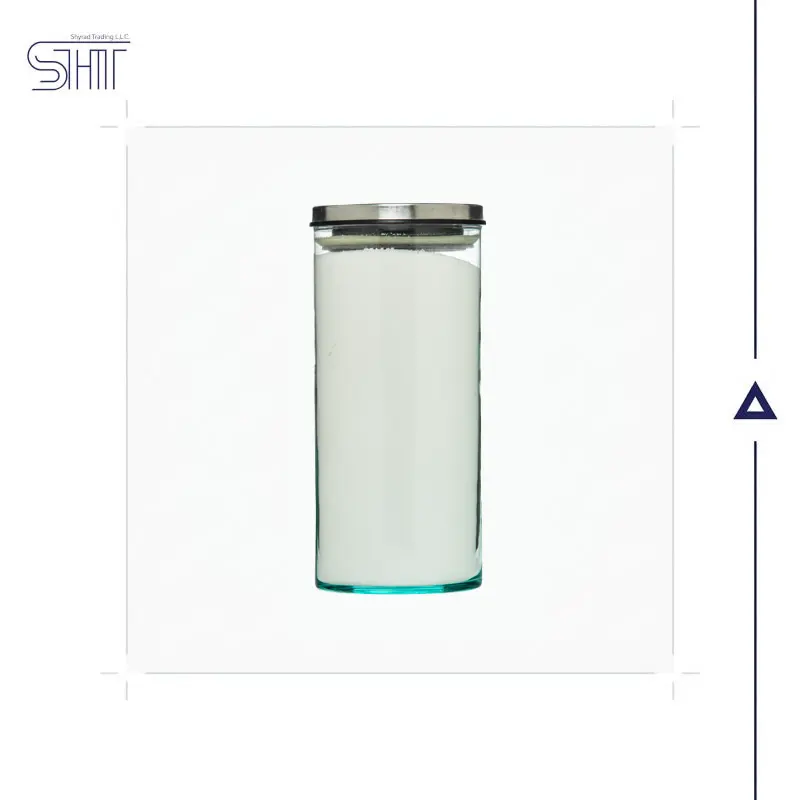
Titanium dioxide is an inorganic compound with the chemical formula TiO₂, widely recognized as one of the most important white pigments used in industry. It appears as a fine white powder with exceptional brightness and a very high refractive index, giving it outstanding opacity and whiteness. Titanium dioxide occurs naturally in minerals such as Rutile,  Anatase, and Brookite. Because of its chemical stability, non‑toxicity, and excellent light‑scattering properties, it is extensively used in paints, coatings, plastics, paper, cosmetics, and food products.

chemical formula

TiO₂

Physical and Chemical Properties

Chemical Formula: TiO₂

Molar Mass: 79.87 g/mol

Appearance: White crystalline powder

Melting Point: ~1843 °C

Boiling Point: ~2972 °C

Solubility: Insoluble in water and most organic solvents

Crystal Forms: Rutile, Anatase, and Brookite

Chemical Stability: Highly stable and resistant to corrosion and UV radiation

Molecular Structure and Reactions

Titanium dioxide is composed of titanium ions (Ti⁴⁺) and oxide ions (O²⁻) arranged in a crystalline lattice. The two most commercially important crystal structures are rutile and anatase, each with different optical and photocatalytic properties. Rutile has a higher refractive index and is commonly used as a pigment, while anatase shows stronger photocatalytic activity.

Under ultraviolet light, TiO₂ can act as a photocatalyst, generating reactive oxygen species that can break down organic compounds. This property is used in environmental purification and self‑cleaning materials.

Example simplified photocatalytic reaction:

TiO₂ + hv → e⁻ + h⁺

These generated electrons and holes participate in oxidation–reduction reactions with surrounding molecules.

Production Methods

  1. Sulfate Process:

Titanium-containing ores such as ilmenite are digested with sulfuric acid to produce titanium sulfate, which is then hydrolyzed and calcined to form titanium dioxide pigment.

  1. Chloride Process:

Titanium ores are reacted with chlorine gas in the presence of carbon to produce titanium tetrachloride (TiCl₄), which is then oxidized at high temperatures to form high‑purity TiO₂.

  1. Purification and Surface Treatment:

After production, TiO₂ particles are often coated with compounds such as silica or alumina to improve dispersion, durability, and weather resistance in coatings and plastics.

Applications

  1. A) Paints and Coatings

Titanium dioxide is the most widely used white pigment in paints and coatings. Its high refractive index provides exceptional opacity, brightness, and UV resistance. It improves durability, weather resistance, and color stability in architectural paints, industrial coatings, and protective finishes.

  1. B) Plastics and Polymers

In plastics manufacturing, TiO₂ acts as a whitening and opacifying agent. It enhances brightness, UV stability, and mechanical durability in products such as PVC pipes, packaging materials, films, and household goods.

  1. C) Paper Industry

Titanium dioxide is used as a coating pigment in high‑quality papers to improve brightness, opacity, and printability. It enhances the visual appearance and performance of specialty papers and packaging materials.

  1. D) Cosmetics and Personal Care

Due to its ability to reflect and scatter ultraviolet radiation, titanium dioxide is widely used in sunscreens and cosmetic products such as foundations, powders, and lotions. It provides broad‑spectrum UV protection while remaining chemically stable and safe for topical use.

  1. E) Environmental and Advanced Technologies

Titanium dioxide is used in photocatalytic coatings, air purification systems, and self‑cleaning surfaces. Under UV light, it helps break down pollutants, bacteria, and organic contaminants, making it useful in environmental protection technologies.

Advantages

Advantages

Summary

Titanium dioxide is one of the most important industrial pigments due to its superior whiteness, opacity, and chemical stability. Its versatility allows it to be used across numerous industries, including paints, plastics, cosmetics, and environmental technologies. Continuous improvements in production and surface treatment technologies have further expanded its applications in modern materials and sustainable industrial processes.