>>
>>
Potassium Feldspar (K Feldspar)

Potassium Feldspar (K Feldspar)

Potassium feldspar, often called K‑feldspar or potassic feldspar, is a group of important rock‑forming minerals that contain potassium, aluminum, and silica. It is one of the most abundant minerals in the Earth’s crust and is commonly found in igneous and metamorphic rocks such as granite. Potassium feldspar is widely used in ceramics, glass production, and as a flux in various industrial processes because it lowers melting temperatures and improves material strength.

chemical formula

KAlSi₃O₈

Physical and Chemical Properties

Chemical Formula: KAlSi₃O₈

Molar Mass: 278.33 g/mol

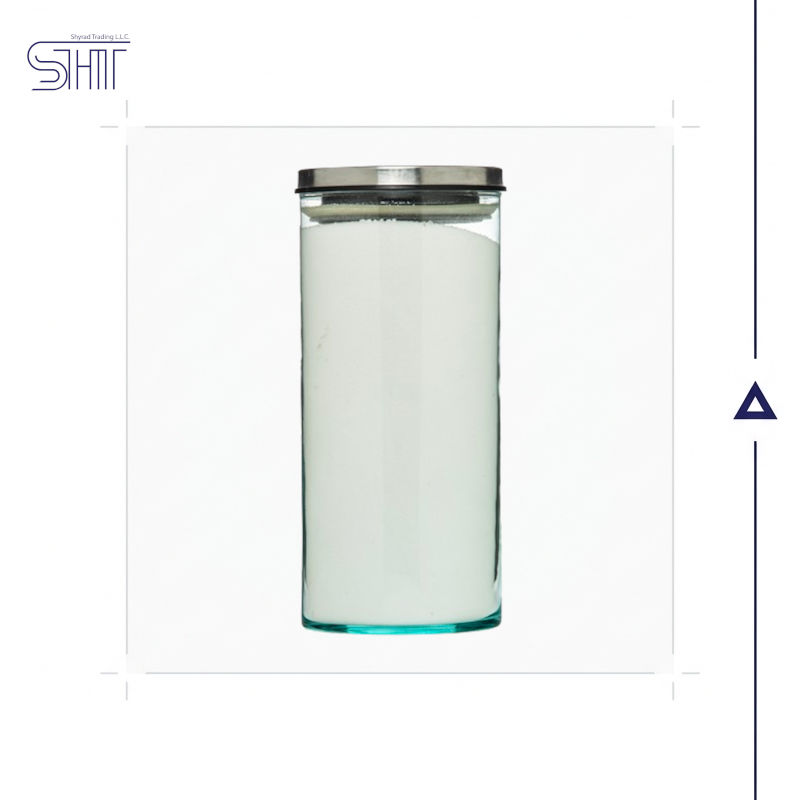
Appearance: White, pink, or light-colored crystalline mineral

Crystal System: Monoclinic or triclinic depending on the type

Hardness: 6 on Mohs scale

Density: ~2.55–2.63 g/cm³

Melting Temperature: ~1150–1200 °C

Solubility: Insoluble in water

Molecular Structure and Reactions

Potassium feldspar belongs to the tectosilicate mineral group. Its structure consists of a three‑dimensional framework of SiO₄ and AlO₄ tetrahedra. In this lattice, potassium ions (K⁺) occupy spaces between the tetrahedral framework to balance the charge created by aluminum substitution.

General structural formula:

K⁺ + Al³⁺ + 3Si⁴⁺ + 8O²⁻ → KAlSi₃O₈

This framework structure gives potassium feldspar good thermal stability and chemical durability.

Production Methods

Potassium feldspar is obtained through mining of feldspar-rich rocks such as granite and pegmatite.

Typical processing steps include:

  • Crushing and grinding of the ore
  • Magnetic separation to remove iron impurities
  • Flotation or washing to improve purity
  • Drying and milling into fine powder

The final product is usually supplied as powdered feldspar for industrial use.

Applications

  1. A) Ceramics

Potassium feldspar is a major raw material in ceramic bodies and glazes. It acts as a flux, lowering the melting temperature and helping to form a glassy phase that increases strength and durability.

  1. B) Glass Manufacturing

In glass production, potassium feldspar supplies alumina (Al₂O₃) and potassium oxide (K₂O), which improve the hardness, chemical resistance, and durability of glass.

  1. C) Fillers in Paints and Plastics

Ground feldspar is used as a functional filler in paints, coatings, rubber, and plastics to improve durability, abrasion resistance, and chemical stability.

  1. D) Welding Electrodes

It is used in welding electrode coatings to stabilize the arc and improve slag formation.

Advantages

Advantages

Summary

Potassium feldspar is a widely used industrial mineral with important roles in ceramics, glass, and manufacturing industries. Its framework silicate structure, abundance, and ability to act as a flux make it an essential raw material in many high‑temperature industrial processes.