
>>
>>
Cobalt Oxide

In Quality We Trust

Cobalt Oxide

Cobalt Oxide is an important inorganic chemical and one of the most powerful coloring oxides used in the ceramic, glass, enamel, and pigment industries. It is primarily supplied in cobalt oxide forms such as Cobalt(II) Oxide (CoO) and Cobaltosic Oxide (Co₃O₄), with Co₃O₄ commonly serving as a commercial source of cobalt oxide in ceramic applications.

Cobalt Oxide is particularly valued for its ability to produce strong and stable blue coloration in ceramic glazes, glass, and porcelain products. Because of its high coloring strength, relatively small additions can significantly influence the final color and appearance of a fired product. Its performance is affected by glaze chemistry, firing temperature, atmosphere, and the presence of other metal oxides.
chemical formula

Co₃O₄ / CoO

Physical and Chemical Properties

Chemical Formula Co₃O₄ / CoO
Molecular Weight Co₃O₄: 240.80 g/mol / CoO: 74.93 g/mol
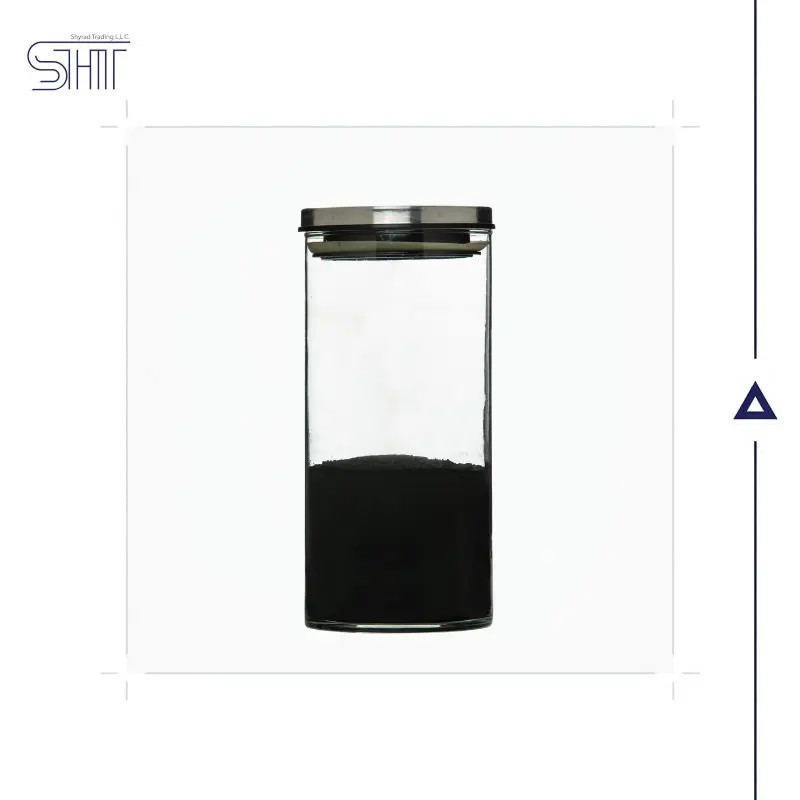
Appearance Black or dark-colored powder
Color Contribution Blue to deep blue
Density Approximately 6.0 g/cm³ for Co₃O₄
Water Solubility Insoluble
Thermal Behavior Co₃O₄ decomposes to CoO and oxygen at elevated temperature

Co₃O₄ is commonly supplied as a dry powder and acts as an efficient cobalt source in ceramic formulations. During firing, Co₃O₄ undergoes thermal decomposition and forms CoO, which subsequently participates in the glassy phase and contributes to the characteristic cobalt coloration.

Molecular Structure and Reactions

Cobalt Oxide materials used in ceramics are based primarily on cobalt and oxygen. Two important oxide forms are Cobalt(II) Oxide (CoO) and Cobaltosic Oxide (Co₃O₄).

Co₃O₄ contains cobalt in different oxidation states and is widely used as a commercial ceramic source of cobalt. At elevated firing temperatures, it decomposes according to the simplified reaction:

2Co₃O₄ → 6CoO + O₂

The resulting CoO can dissolve into the glaze's glassy phase and act as a strong coloring oxide. The final shade depends not only on the cobalt concentration but also on the composition of the glaze, firing temperature, kiln atmosphere, and interactions with other oxides.

Production Methods

Cobalt Oxide is produced through controlled chemical and thermal processes involving cobalt-containing raw materials.

One common production route involves the precipitation or preparation of cobalt compounds followed by controlled calcination. Cobalt carbonate and other cobalt oxide intermediates can be thermally treated to obtain the required cobalt oxide form.

For Cobalt(II) Oxide, controlled calcination of suitable cobalt compounds, including cobalt carbonate, can produce CoO. Industrial production requires careful control of temperature, atmosphere, purity, and particle characteristics to achieve consistent chemical and physical properties.

Applications

Ceramic Glazes

Cobalt Oxide is widely used as a powerful blue colorant in ceramic glazes. It can produce intense blue shades even at relatively low addition levels. The final color can vary depending on the glaze composition and firing conditions.

Porcelain and Ceramic Bodies

Cobalt compounds can be incorporated into ceramic bodies and engobes to produce blue coloration. Particle dispersion and formulation control are important for achieving uniform results.

Glass Manufacturing

Cobalt Oxide is used as a coloring and, in certain formulations, decolorizing agent in glass production. Its strong optical effect makes it useful when controlled blue coloration is required.

Enamels

Cobalt Oxide is used in porcelain enamels and enamel coatings to develop blue coloration and contribute to adhesion-related performance in specific formulations.

Pigments and Specialty Materials

Cobalt oxide compounds are also used in inorganic pigments, catalysts, and the production of other cobalt-containing materials.

Summary

Cobalt Oxide is a high-performance inorganic material with major applications in ceramics, glazes, porcelain, glass, enamels, and pigments. Its exceptional coloring strength and ability to produce intense blue shades make it an important raw material for manufacturers seeking controlled and distinctive ceramic colors.

For ceramic manufacturers, selecting the appropriate cobalt oxide grade, particle characteristics, purity, and dosage is essential for achieving consistent color development and minimizing defects. The final performance should always be evaluated in relation to the complete glaze or ceramic formulation and the specific firing conditions.