>>
>>
Kaolin

Kaolin

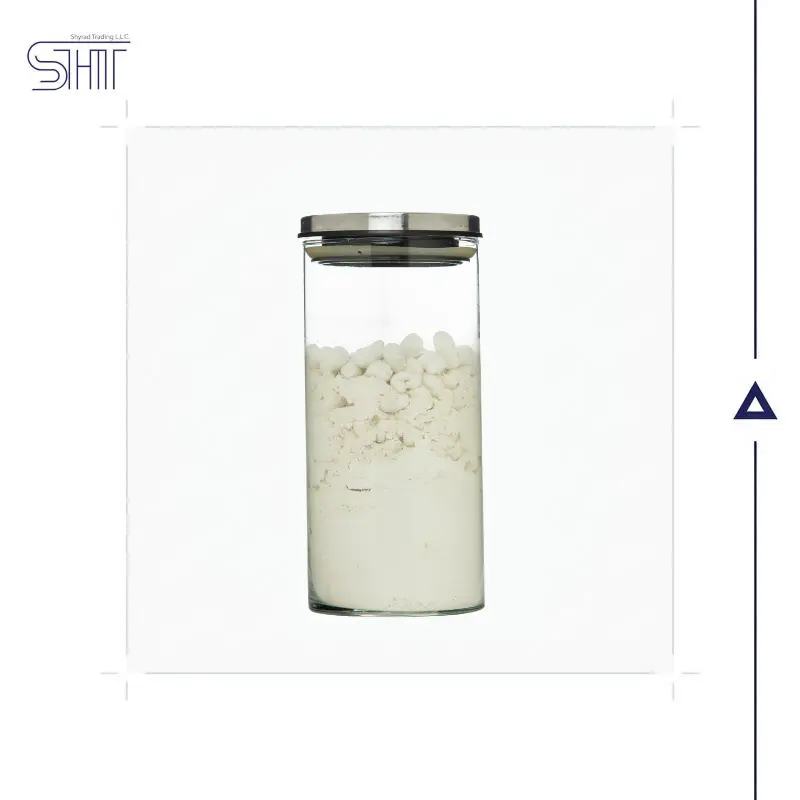
Kaolin, also known as china clay, is a naturally occurring clay mineral primarily composed of the hydrous aluminum silicate mineral kaolinite. It forms through the weathering and hydrothermal alteration of feldspar‑rich rocks such as granite. Kaolin typically appears as a soft, white powder and is valued for its fine particle size, chemical inertness, and high whiteness. Because of these properties, it is widely used in ceramics, paper, paints, rubber, plastics, and pharmaceuticals.

chemical formula

Al₂Si₂O₅(OH)₄

Physical and Chemical Properties

Chemical Formula: Al₂Si₂O₅(OH)₄

Molar Mass: 258.16 g/mol

Appearance: White to off‑white fine powder

Melting Point: ~1750 °C

Density: ~2.6 g/cm³

Solubility: Insoluble in water; chemically stable in most environments

Plasticity: Moderate plasticity when mixed with water

Particle Size: Typically very fine (often <2 μm)

Molecular Structure and Reactions

Kaolin consists mainly of the mineral kaolinite, which has a layered silicate structure. Each layer is composed of one silica tetrahedral sheet bonded to one alumina octahedral sheet, forming a stable 1:1 clay mineral structure. These layers are held together by hydrogen bonding, giving kaolin relatively low swelling capacity compared to other clay minerals such as montmorillonite.


When heated to high temperatures (around 450–600 °C), kaolin undergoes dehydroxylation to form **metakaolin**, an amorphous aluminosilicate material with high reactivity:


Al₂Si₂O₅(OH)₄ → Al₂Si₂O₇ + 2H₂O


Further heating above about 1000 °C leads to the formation of mullite and free silica, which contribute to the strength of ceramic materials.

Production Methods

    1. Mining and Extraction

    Kaolin is typically mined from open‑pit deposits formed by the weathering of feldspar‑rich rocks.


    1. Beneficiation and Processing

    After extraction, the raw kaolin is purified through processes such as washing, sedimentation, magnetic separation, and flotation to remove impurities like iron oxides and quartz.


    1. Drying and Milling

    The purified material is then dried and milled into fine powder or processed into slurry form depending on its intended industrial application.

Applications

    1. A) Ceramics

    Kaolin is a key raw material in ceramic manufacturing, including porcelain, sanitary ware, tiles, and tableware. It provides whiteness, plasticity, and structural strength, helping ceramic bodies maintain their shape during forming and firing.


    ### B) Paper Industry

    In the paper industry, kaolin is widely used as a coating and filler material. It improves brightness, smoothness, opacity, and printability of paper products while enhancing ink absorption.


    ### C) Paints and Coatings

    Kaolin acts as a functional filler in paints and coatings, improving suspension stability, durability, and surface finish. It also enhances resistance to cracking and improves coating performance.


    ### D) Rubber and Plastics

    In polymer industries, kaolin is used as a reinforcing filler that improves mechanical strength, dimensional stability, and surface quality in rubber and plastic products.


    ### E) Pharmaceuticals and Cosmetics

    Due to its fine particle size and chemical inertness, kaolin is used in medicinal and cosmetic formulations. It functions as an absorbent, anti‑caking agent, and skin‑protective ingredient in products such as powders, creams, and ointments.

Advantages

Advantages

Summary

Kaolin is an important industrial clay mineral with a wide range of applications across ceramics, paper, coatings, polymers, and pharmaceuticals. Its fine particle size, chemical stability, and high whiteness make it a valuable raw material for many manufacturing processes. Through careful processing and purification, kaolin can be tailored to meet the specific performance requirements of various industries.